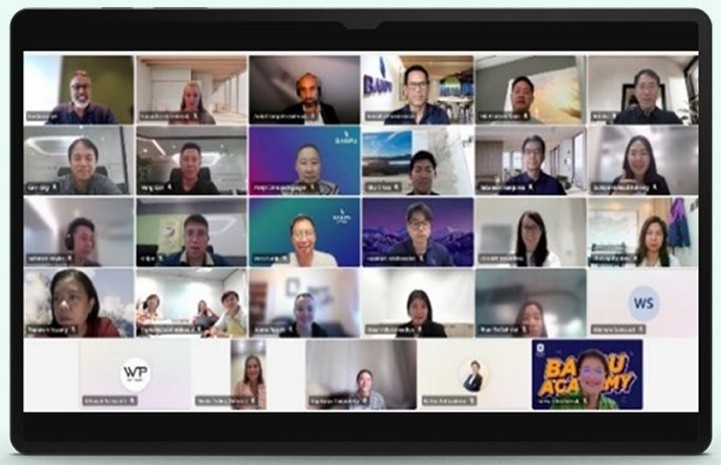
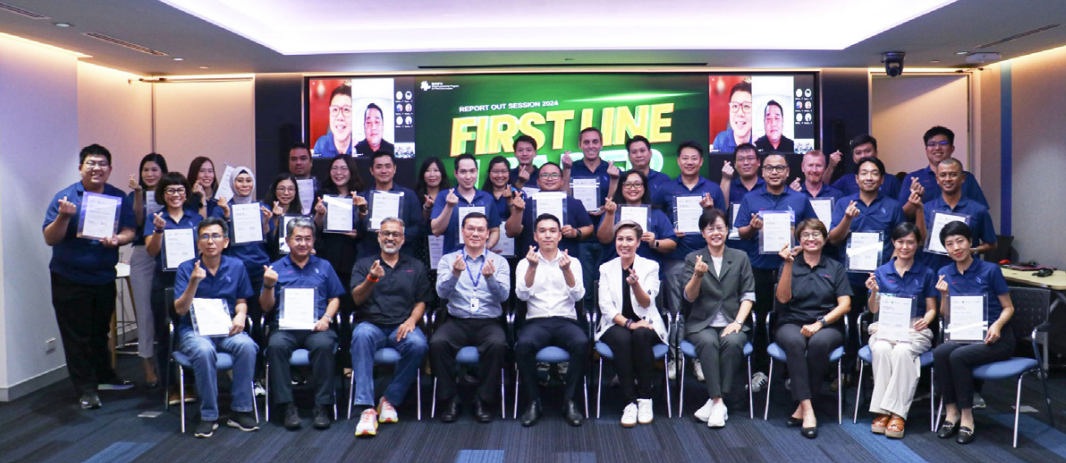
BPP continuously develops its employee’s leadership competency through Banpu Group’s leadership programs, playing a crucial role in strengthening leadership, which is the foundation for sustainable business growth and long-term organizational adaptability. The program is designed with a results-oriented development approach to enhance leadership skills, being able to apply them to operations practically, generating tangible business results and in alignment with BPP’s sustainability strategy. The program provides an opportunity for selected leaders from various operating countries to learn and exchange experiences in a global context through experiential learning and collaborative work among participants from different fields and cultures. This helps develop leadership skills essential for driving the organization in the future, including:
• Systematic thinking and strategic perspectives.
• Managing organizations amidst changes and uncertainty.
• Working with stakeholders across diverse cultures.
• Driving innovation and continuous improvement.
Such a project is held annually and lasts approximately 6–8 months. In 2025, 108 employees participated in this program, representing 10.5% of the total workforce (full-time equivalent or FTEs). The training is structured in modules, combined with hands-on project learning, knowledge sharing among participants, and collaborative learning with leading consulting firms and specialists. Banpu Group’s leadership programs are divided into four levels:
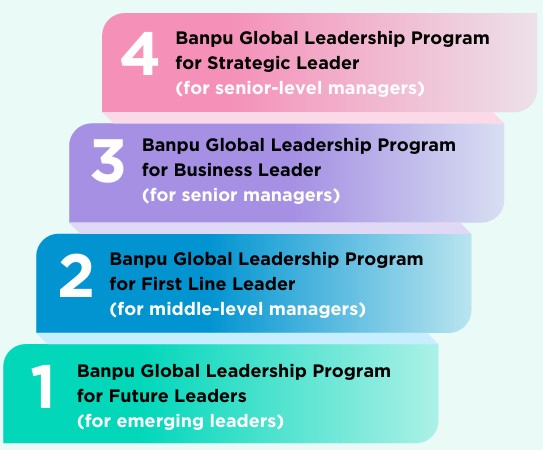
Each level of the program is designed to be aligned with the responsibilities and organization’s future direction. Furthermore, Banpu Global Leadership program supports sustainability and long-term value creation in three key areas:
1. Promoting excellence in leadership and ethical governance: Instilling ethical, responsible, and resilient leadership skills, preparing leaders to be exemplary in integrity and responsible decision-making, which are fundamentals of sustainable corporate governance.
2. Developing strategic and financial capabilities for sustainable growth: Strengthening strategic planning skills, financial knowledge, and market analysis to support informed decision-making and a balance between business performance and environmental and social responsibility.
3. Promoting agile and collaborative work, ready to change in the future: Fostering collaboration between regional business units, which helps enhances organizational agility, innovation capabilities, and readiness to address future sustainability challenges and energy transitions.
Benefits
• 100% of critical positions are succeeded by employees participating in the program.
• 100% of employees selected as high-potential group joined the program.
• Retaining 100% of employees selected as high-potential group within the organization.
Social Contributions
• The communities or areas where BPP operates benefit from the decisions made by leaders who are responsible, fair, and putting great emphasis on stakeholders’ impacts.
• Employees who are developed in leadership skills and ethical decision-making can apply such skills in both their work and lives.
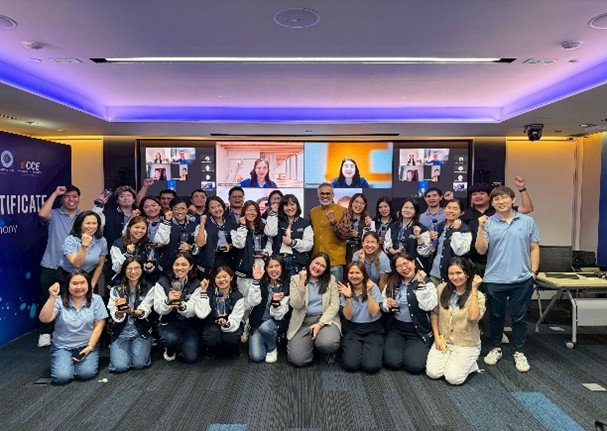
BPP strengthens its human resources through capacity building programs for power plant employees in China. This program focuses on upgrading employee operational skills to meet future challenges in order to maintain machinery operation, operational efficiency, and long-term business resilience. In 2025, over 816 power plant employees, or 81.6% of the total workforce (FTEs), accumulating more than 22,500 training hours, participated in this program. This reflects BPP’s commitment to continuously investing in developing employee skills under the concept of results-oriented workforce development, ensuring that learning can be applied in real-world situations and create tangible business results.
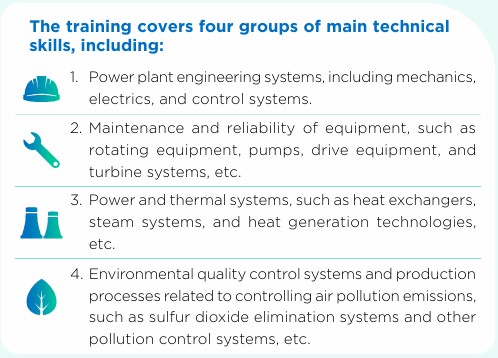
Objectives:
• Enhancing knowledge, technical skills and operational capabilities of the production and maintenance team.
• Promoting knowledge exchange to improve efficiency and solve on-site problems.
• Increasing the power plant stability by enhancing employee capabilities in operation and maintenance.
Benefits:
• More efficient in technical problem solving and collaboration working, resulting in innovation performance scores higher than China’s industry average.
• The voluntary resignation rate decreased significantly from 10.77% in 2023 to 2.51% in 2025, potentially saving approximately USD 55,000 in recruitment and replacement costs.
• All three CHP plants in China maintained an availability factor (AF) of 94.17%, better than the previous year and exceeding the target of 90%.
Social Contributions:
• Helping reduce risks resulting from accidents and elevate workplace safety standards.
• The power plant’s efficient operations and strong environmental controls have positive effects on both the local community and society.
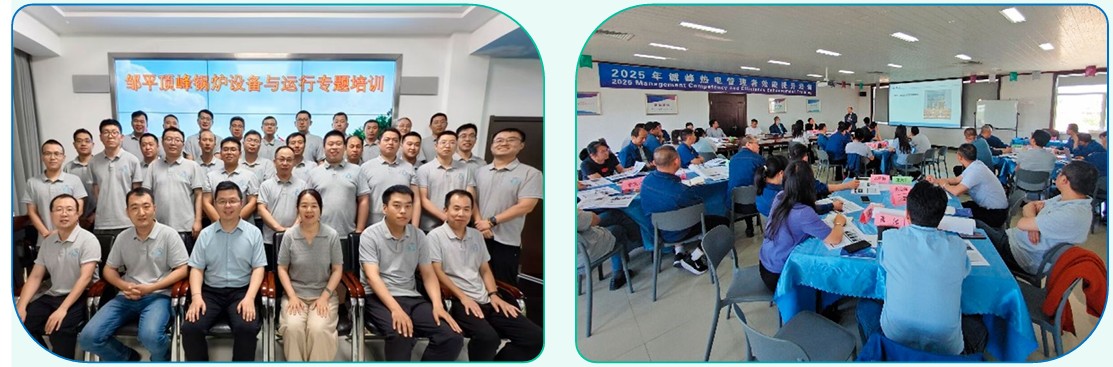
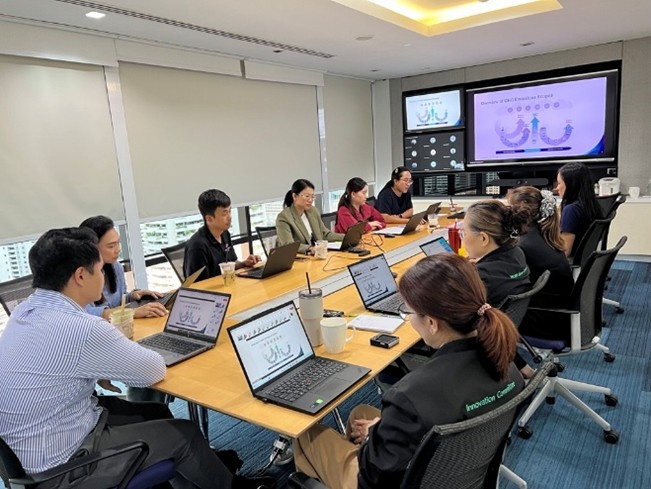
BPP recognizes the importance of knowledge management (KM) within the organization. We believe that it is a key mechanism for promoting innovation and creating an environment open to new ideas. Knowledge exchange among employees will help connect to diverse information, leading to the development of approaches to continuously improve work efficiency. Therefore, BPP regularly organizes BPP Knowledge Management Sharing events every quarter to provide an opportunity for each department to present knowledge, exchange experiences, and update information related to business operations. The KM sharing covers six topics as follows:
1) Updating business and power technology data.
2) Organizational policies and working practices.
3) Work procedures
4) Best practices
5) Lessons learned
6) Technical methods and skills used for working
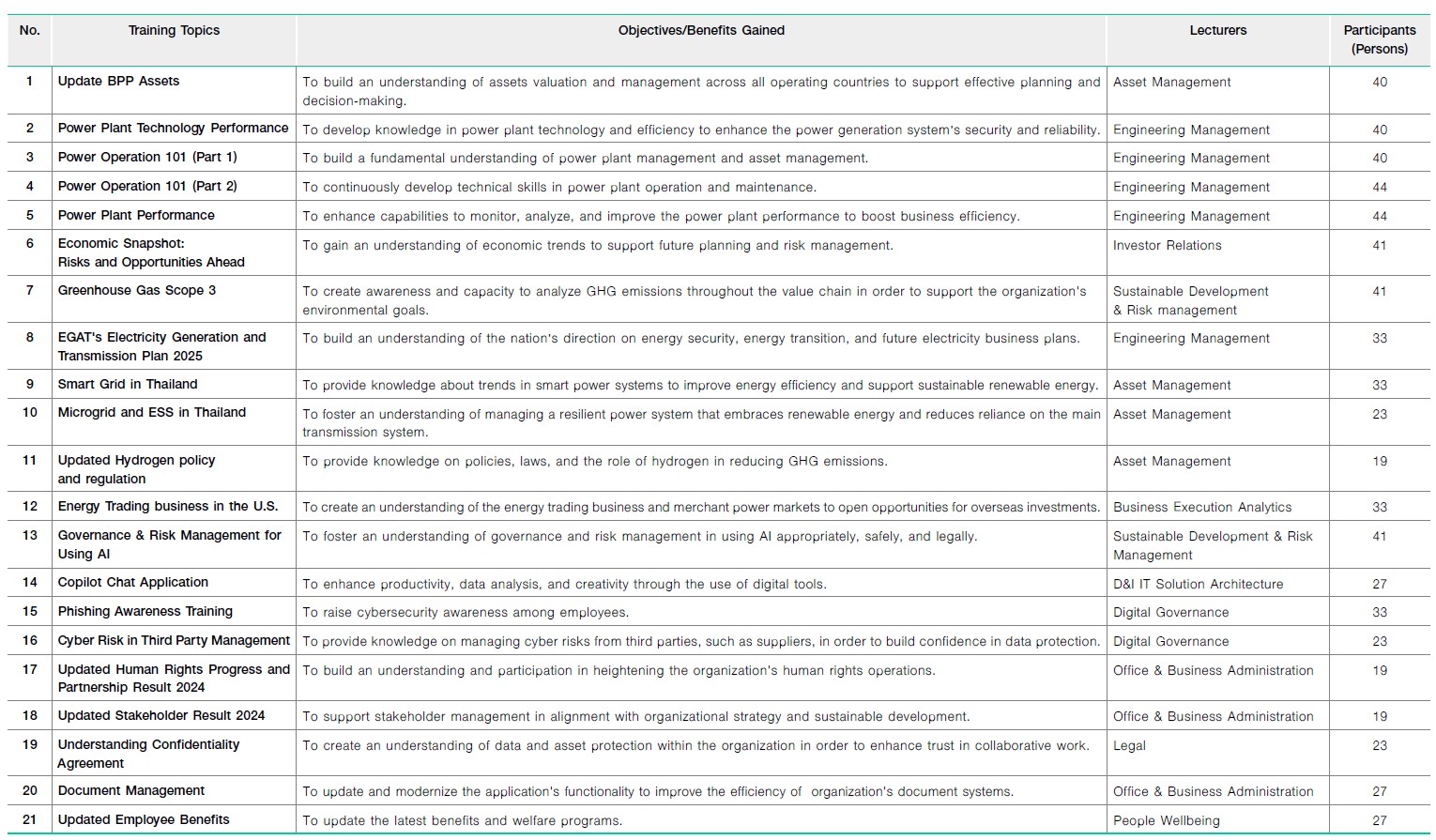
In 2025, BPP organized KM Sharing activities with 21 training topics, representing 11.30 training hours, as detailed below:
The digital competency development project was established in 2018 and has been implemented through Banpu Digital Academy, a key mechanism for driving Banpu Group’s digital transformation. It aims to enhance digital awareness and capabilities among personnel at all levels by integrating digital skills into human resource development processes. This is achieved through designing personalized learning pathways on an online learning platform, enabling employees to continuously develop their skills in line with their roles. In 2025, this project focused on curricula related to digital and technology skills essential for future jobs, such as Data Science, Artificial Intelligence (AI), ChatGPT, Data Visualization, and DevOps. It was implemented across all countries where BPP operates.
• A total of 245 employees participated in the training, representing 4.9% of the total workforce.
• A total of 511 courses for enrollment.
• A total of 2,985 learning hours, averaging 12.18 hours/ person.
Benefits:
• Enhancing competitive advantages by improving operational efficiency, utilizing data, and applying technology to business operations.
• Developing human capital in alignment with business direction and the organization’s sustainable growth.
Social Contributions:
• Personnel possessing skills aligned with the needs of future labor market.
• Developing human resources ready to responsibly utilize technology.